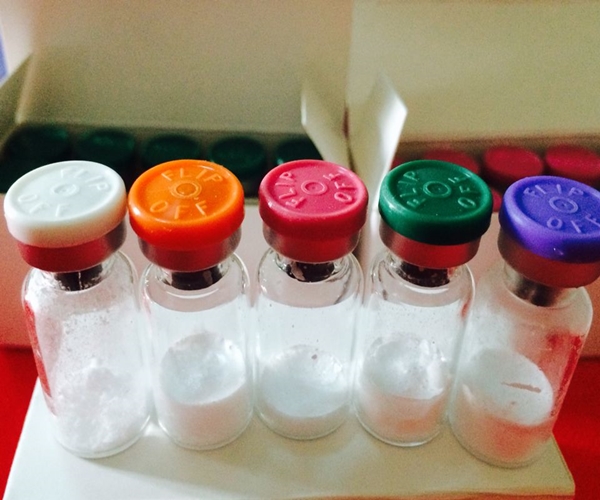
Usage : acétate d'octréotide, comme formulation à effet retard injectable pour le traitement des tumeurs productrices d'hormone de croissance (acromégalie et gigantisme).
La description :
Octréotide (nom de marque Sandostatine, Novartis Pharmaceutique) est un octapeptide qui imite pharmacologiquement la somatostatine naturelle, bien qu'il s'agisse d'un inhibiteur plus puissant de l'hormone de croissance, glucagon, et l'insuline que l'hormone naturelle. Il a été synthétisé pour la première fois dans 1979 par le chimiste Wilfried Bauer.
Application :
L'octréotide a également été utilisé hors AMM pour le traitement des maladies graves., diarrhée réfractaire due à d'autres causes. Il est utilisé en toxicologie pour le traitement des hypoglycémies récurrentes prolongées après un surdosage en sulfonylurée et éventuellement en méglitinides.. Il a également été utilisé avec plus ou moins de succès chez les nourrissons atteints de nésidioblastose pour aider à diminuer l'hypersécrétion d'insuline..
L'octréotide a été utilisé expérimentalement pour traiter l'obésité, en particulier l'obésité causée par des lésions dans les centres de la faim et de la satiété de l'hypothalamus, une région du cerveau centrale à la régulation de la prise alimentaire et de la dépense énergétique. Le circuit commence par une zone de l'hypothalamus, le noyau arqué, qui a des sorties vers l'hypothalamus latéral (LH) et hypothalamus ventromédian (VMH), les centres d’alimentation et de satiété du cerveau, respectivement. Le VMH est parfois blessé par le traitement en cours de la leucémie lymphoblastique aiguë (TOUS) ou chirurgie ou radiothérapie pour traiter les tumeurs de la fosse crânienne postérieure.