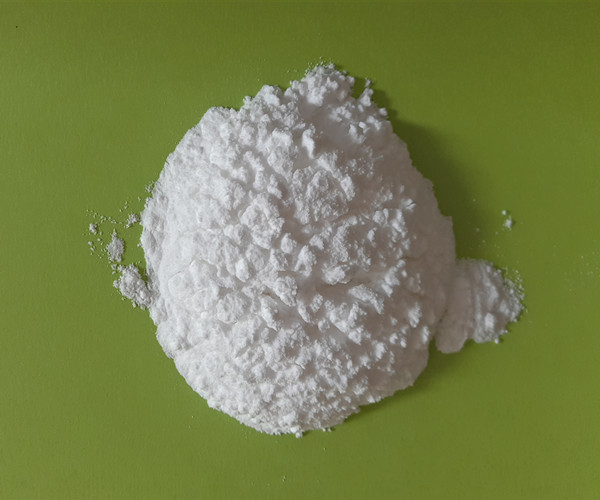
Dehydroepiandrosteronsulfat, abgekürzt als DHEA-Sulfat oder DHEA-S, auch als Androstenolonsulfat bekannt, ist ein endogenes Androstan-Steroid, das von der Nebennierenrinde produziert wird. Es ist der 3β-Sulfatester und ein Metabolit von Dehydroepiandrosteron (DHEA) und zirkuliert in weitaus höheren relativen Konzentrationen als DHEA. Das Steroid ist hormonell inert und stattdessen ein wichtiges Neurosteroid und Neurotrophin.
Neurosteroid-Aktivität:
Ähnlich wie bei anderen konjugierten Steroiden, DHEA-S hat keine hormonelle Aktivität, Es fehlt jedoch die Affinität zu den Steroidhormonrezeptoren, DHEA-S behält seine Aktivität als Neurosteroid und Neurotrophin. Es wurde festgestellt, dass es als positiver allosterischer Modulator des NMDA-Rezeptors wirkt (50 nM–1 μM), negativer allosterischer Modulator der GABAA- und Glycinrezeptoren, und schwacher Agonist des Sigma-1-Rezeptors (Kd > 50 μM).Zusätzlich, Es wurde festgestellt, dass DHEA-S direkt an die TrkA- und p75NTR-Rezeptoren von Neurotrophinen wie dem Nervenwachstumsfaktor bindet und diese aktiviert (NGF) und aus dem Gehirn stammender neurotropher Faktor (BDNF) – mit hoher Affinität (um 5 nM).
Hormonelle Aktivität:
Obwohl DHEA-S selbst hormonell inert ist, Man geht davon aus, dass es wieder in DHEA umgewandelt werden kann,das schwach androgen und östrogen ist, und dass DHEA wiederum in stärkere Androgene wie Testosteron und Dihydrotestosteron umgewandelt werden kann (DHT) sowie Östrogene wie Östradiol.Als solche, Es wurde angenommen, dass DHEA-S ein Prohormon mit dem Potenzial für androgene und östrogene Wirkungen ist, a 2005 Die Studie ergab, dass DHEA in DHEA-S umgewandelt werden konnte, fand jedoch keine Hinweise auf eine Umwandlung von DHEA-S in DHEA.
Andere Aktivität:
Es wurde auch festgestellt, dass DHEA-S die transienten Rezeptorpotentialkanäle TRPV1 und TRPC5 sowie den P2X-Rezeptor hemmt.